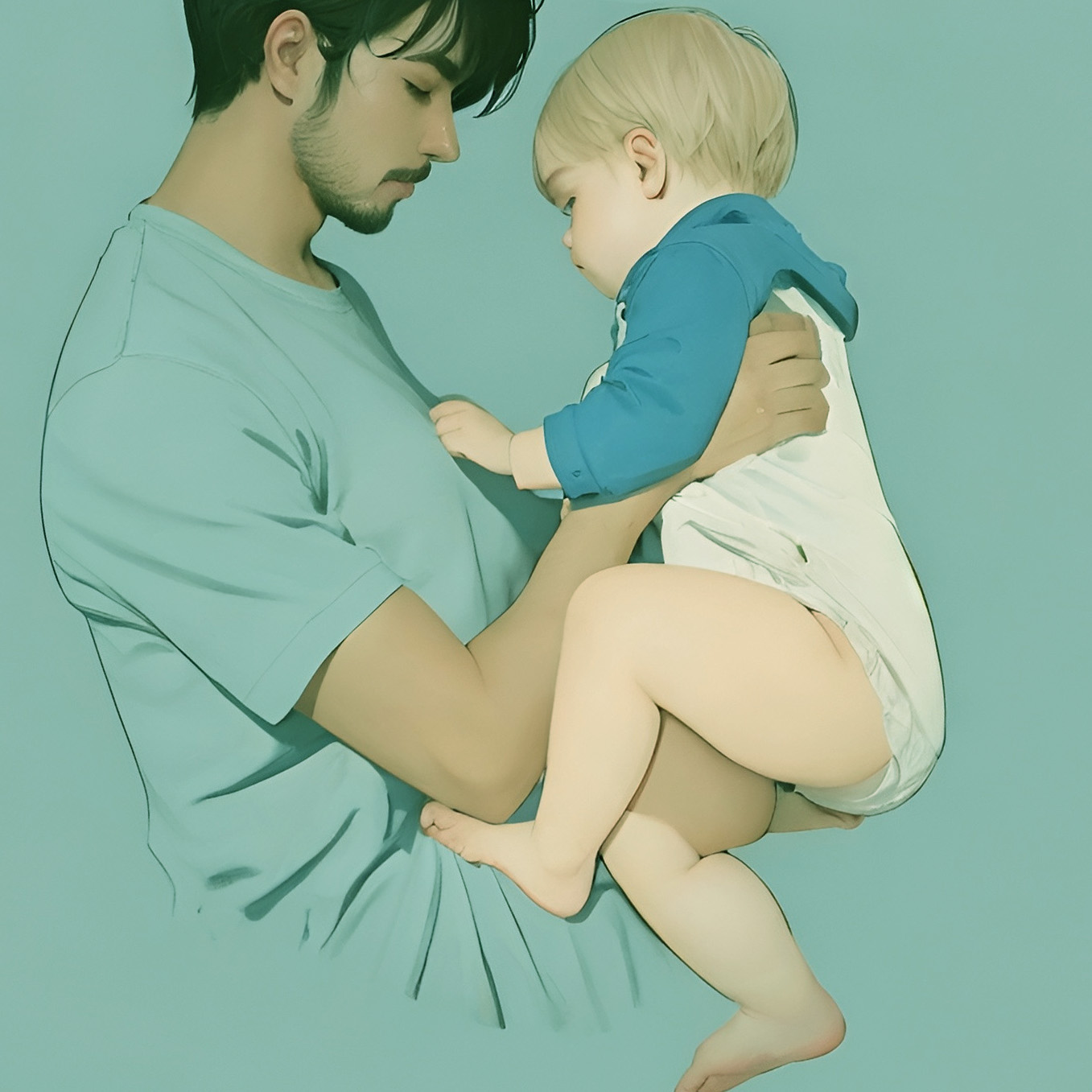
Why Holding Our Babies Close Is in Our Nature
There are species in nature (turtles, snakes, lizards, etc.) that lay their eggs and then abandon them. The babies hatch completely on their own. Very often, only a small number of them survive.
Other species (wolf pups, certain types of wild rabbits, etc.) stay alone in the nest all day while their parents are away hunting. As long as the mother wolf is away, the pups remain absolutely quiet in the nest. They make no sound, so they won’t be found and devoured by predators.
 However, there are some species (like baby monkeys, gorillas, etc.) that never separate from their young. Unable to protect or survive on their own, these babies spend every minute of the day with their mother, often clinging to her. These babies need frequent breastfeeding and protection, often for several years after birth. And naturally, they cry out for their mother every time she leaves them – even briefly!
Our human babies clearly belong to the species that cannot manage without us. They need us for everything, which is why it’s not in their nature to lie quietly in their bed all alone. They feel the urge to remind us, in whatever way they can, that they are entirely dependent on us!
In our species’ evolution, a dilemma arose: A narrower pelvis is more efficient for upright walking, but a larger brain makes birth harder through this narrow passage. After nine months of pregnancy, the weight of a human baby compared to its mother is about twice that of other primates of similar size. The mother’s body doesn’t have the energy to support a longer pregnancy, so our babies are born at an earlier stage of development (their brains are only about 25–30% developed, compared to around 50% in other primates at birth).
This means our babies are born vulnerable and weak. It takes many months before they can even control their own body, and many years before they can meet their basic needs on their own.
 It’s no coincidence that when we lift a newborn, it instinctively curls into a hugging posture: Its legs don’t dangle down but bend and open to “fit” as closely as possible to its mother’s body. The curved spine of infants supports this very posture.
At the same time, the mother’s anatomy evolved accordingly: the hips widen, the iliac bones spread outwards, the waist narrows, creating a unique shape not seen in other species – one that perfectly serves an amazing purpose: it facilitates carrying babies (and even older children) on the side, above the hip.
That may be why humans retain primitive reflexes: Even though the mother no longer has fur for the baby to grip onto, the grasp reflex persists – babies wrap their tiny fingers tightly, showing once again their need to “hold on” close to their mother. The same goes for the moro reflex (also called the “embrace reflex”), whose main purpose was to help the baby cling tightly to its mother if balance was lost.
Holding our baby close is in our nature – it’s what’s “normal” for our species. That’s why our babies expect and want to be held. They spent nine months in a fully protected environment, where all their needs were met instantly. They grew used to that warmth, to hearing their mother’s voice, to feeling her heartbeat and movements, to her rhythm of breathing.
It’s so important to extend these conditions as much as possible, which is why the first period after birth is often referred to as the “fourth trimester”.
A good baby carrier acts, in a way, like an external womb, easing the transition and supporting the baby’s continued development.
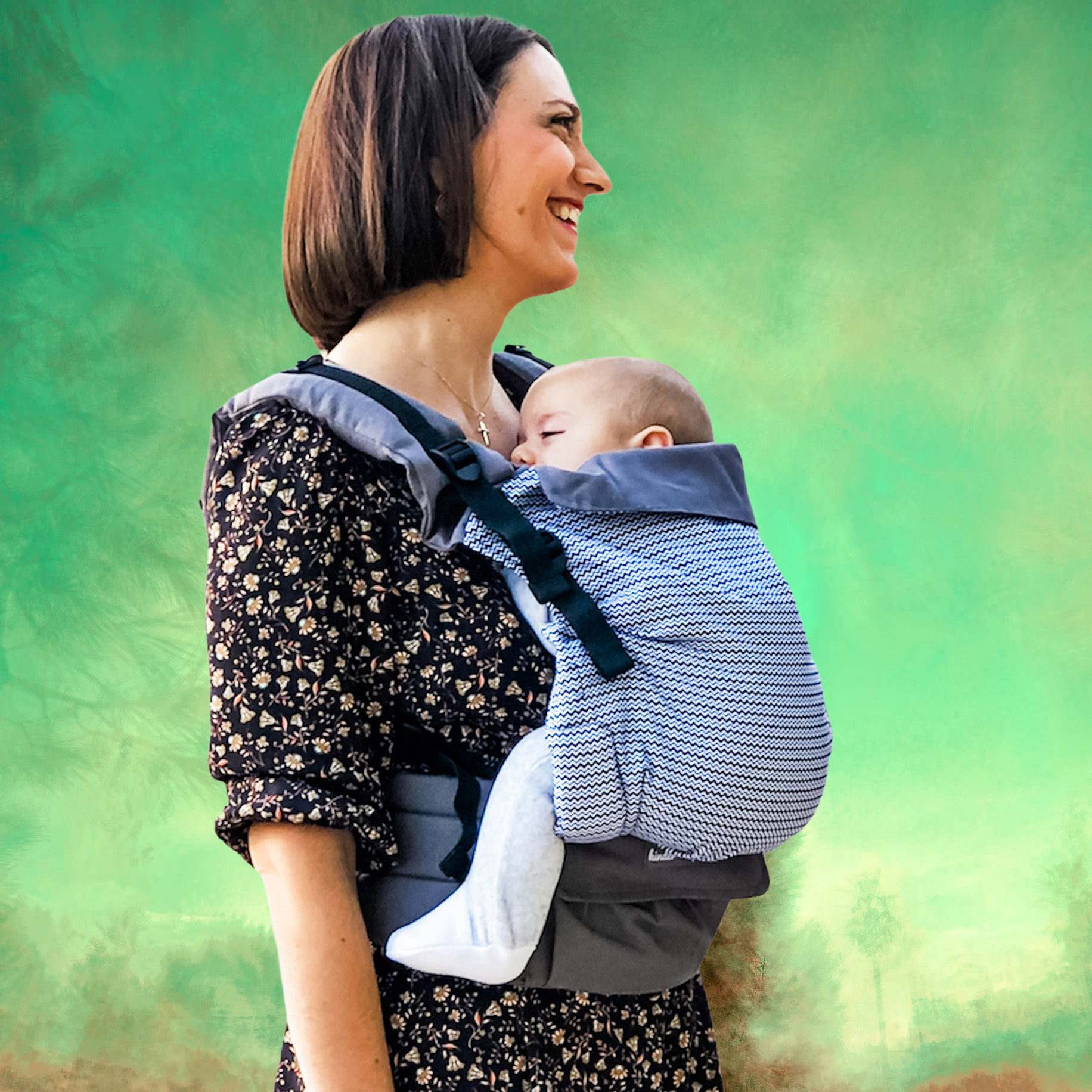 Holding your baby close is not just something we offer them, it’s not just valuable – it’s an absolute, fundamental, primal need. That’s how we are made. Denying our babies the touch and calm of being held is harmful in every way.
Hugs are magical: they stimulate the production of oxytocin (the love hormone), reduce pain, and affect cortisol (the stress hormone). The benefits of holding your baby go far beyond the moment – they shape how neurons in the brain develop and support long-term mental health.
You can read more about this here: Why wear your baby?.