
Baby carriers and strain on the back / neck
An ergonomic baby carrier is the best way to have your baby on you. The carriers you’ll find on this page have nothing to do with the conventional carriers that put all the weight on your shoulders. In an ergonomic carrier, the weight is distributed evenly and your baby plays an active role in being carried (it helps you carry it)! But read below a few things you should know.
I have a back / neck problem. Which carrier should I choose?
1. I get the one with the best weight distribution, so I feel comfortable.
2. I get the one I can put on / take off very quickly, so I don’t wear it for a long time at a stretch, but take it off as soon as the time I could hold the baby in my arms anyway has passed.
Is the ring sling the worst for the back / neck problem I have?
Not necessarily. Maybe yes, maybe no. As you can see in the photos, there are ways to wear our baby where no shoulder is involved at all. The fact that a sling uses one shoulder instead of two doesn’t mean the weight is only on the one shoulder. Your torso, your back, even your chest are still involved. What’s different about the sling is that you have to wear it correctly for it to be correct and comfortable. There is a «right and wrong», and it is in your hands. By contrast, the mei tai, the KiBi, the Luna, or the Kinder Hop, for example, almost don’t let you make a mistake — they guide you into the correct positioning somewhat automatically (especially if you follow the method we teach you at Asteraki).

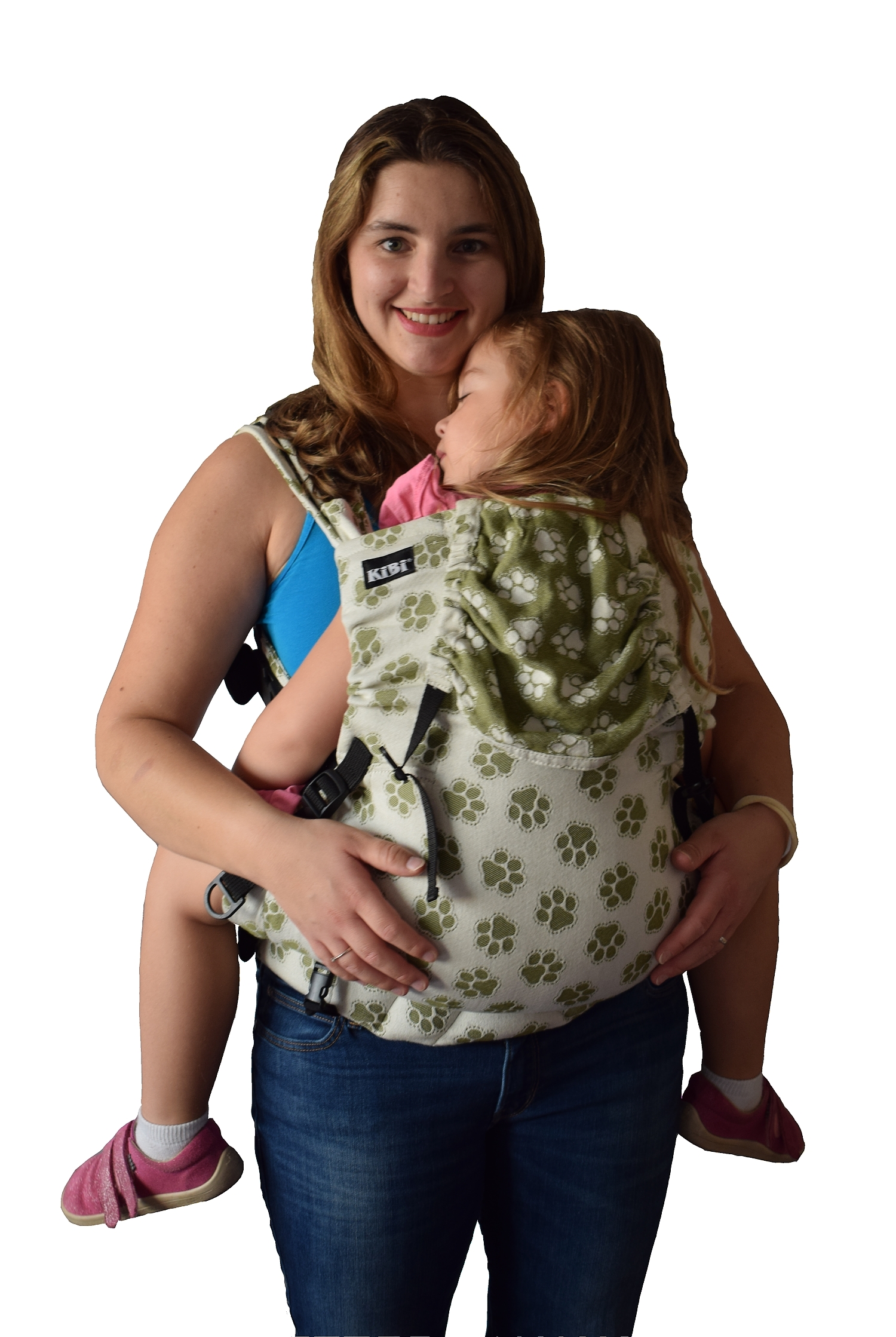
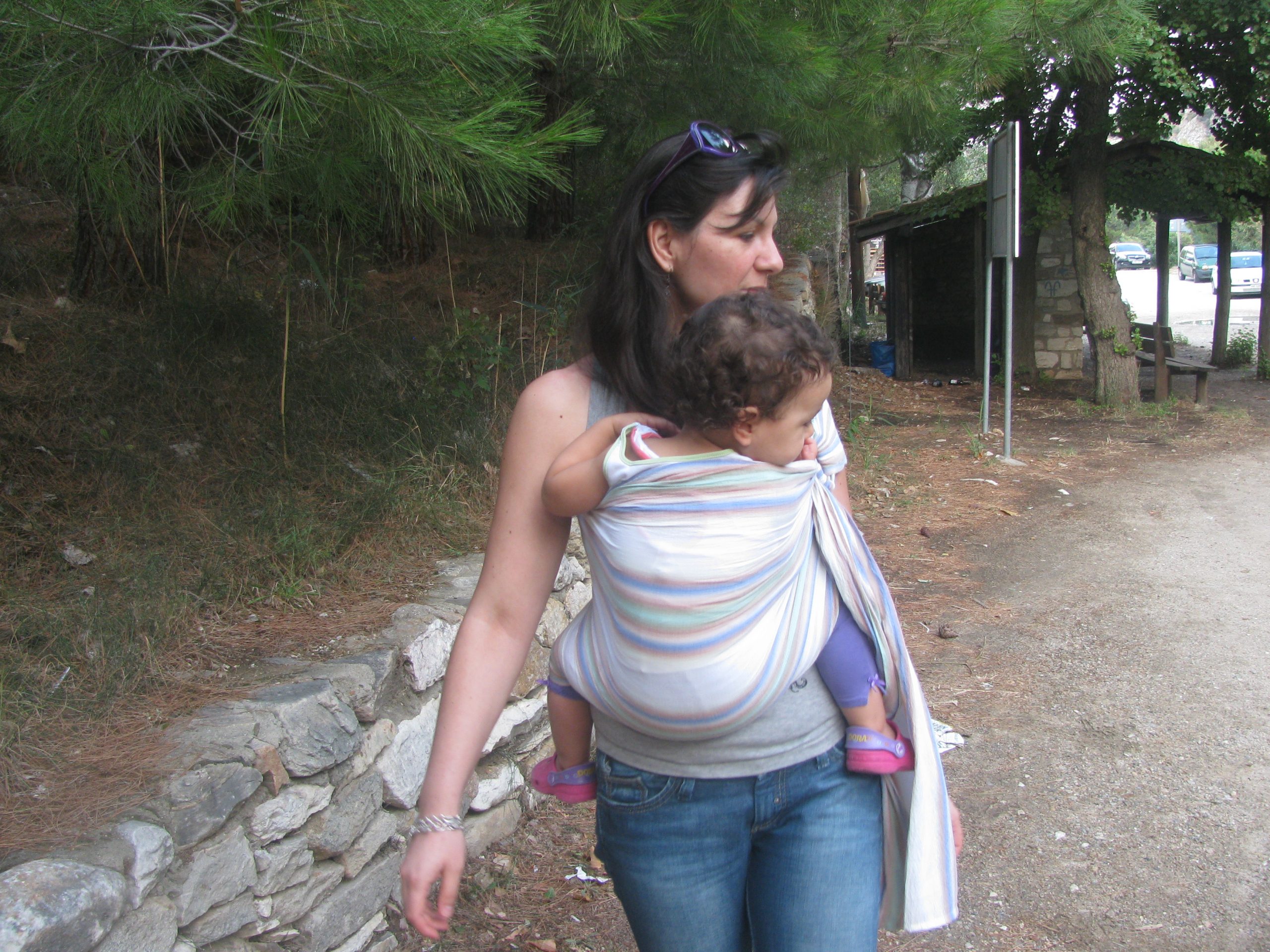

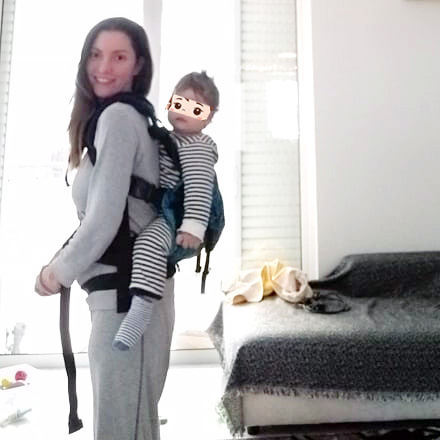
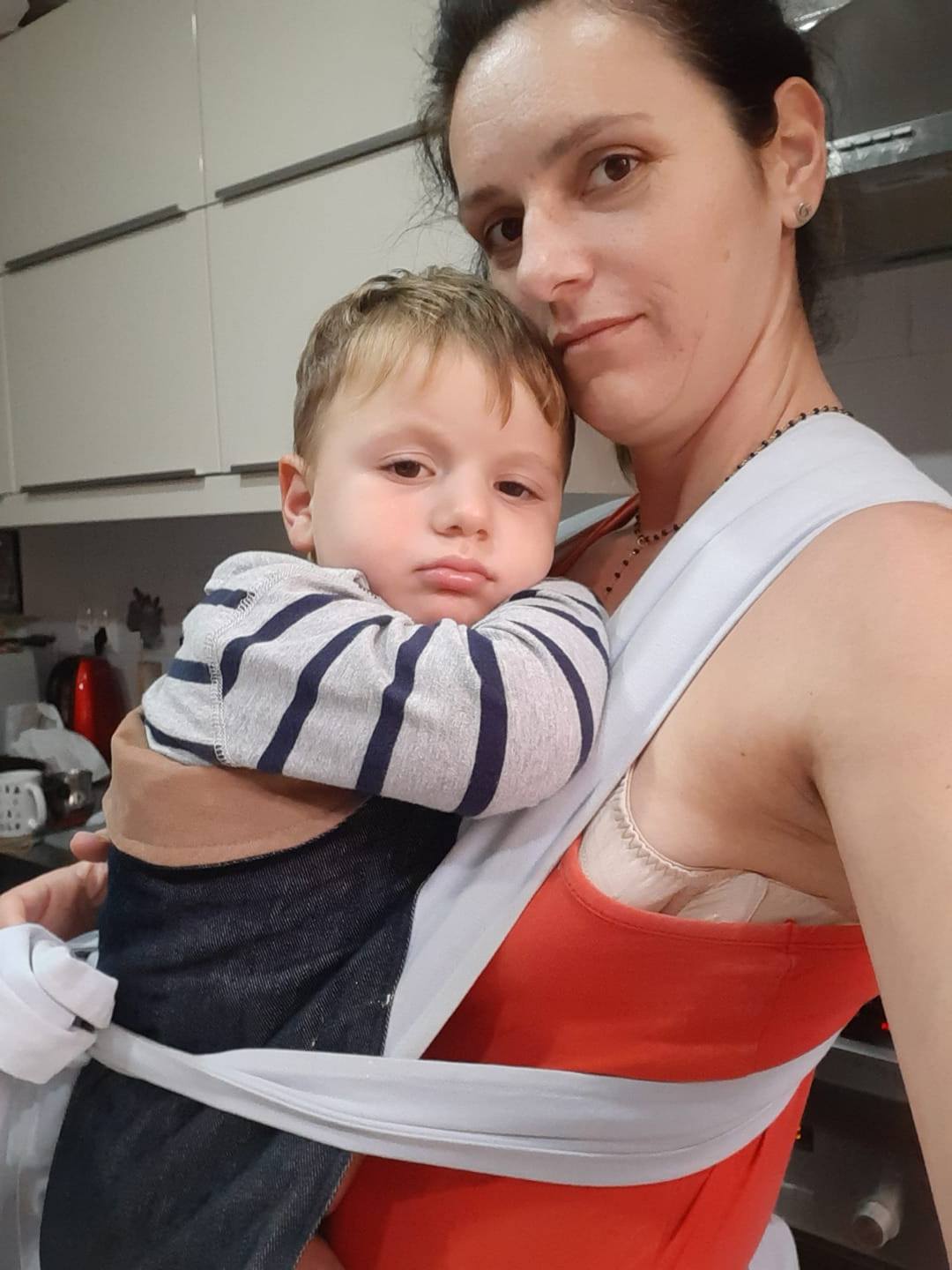

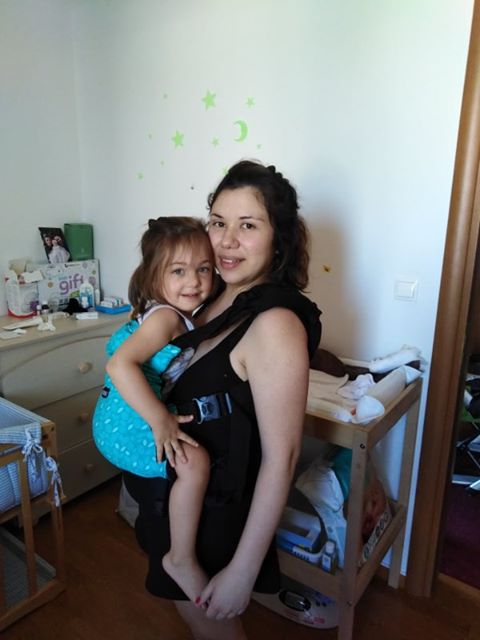
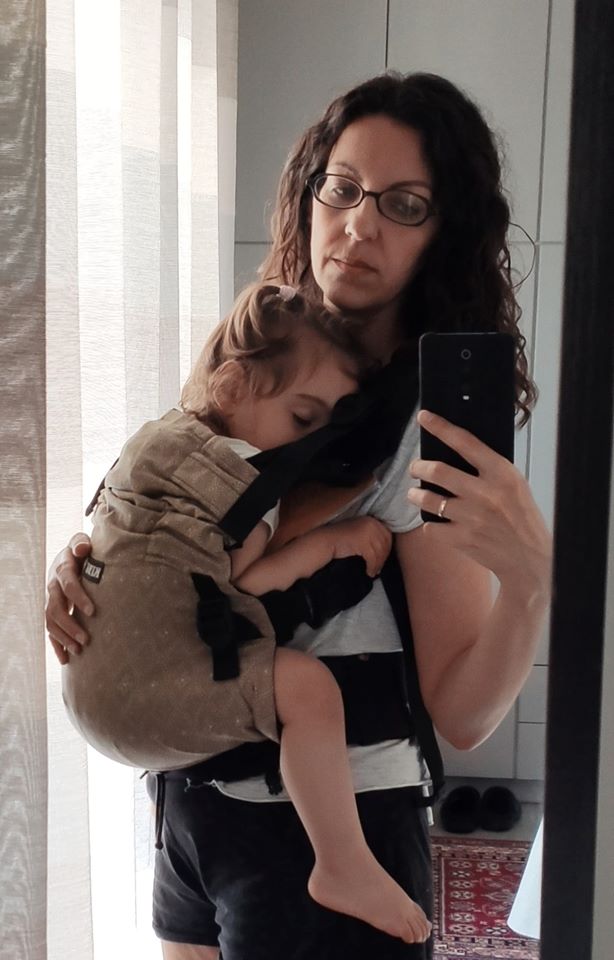
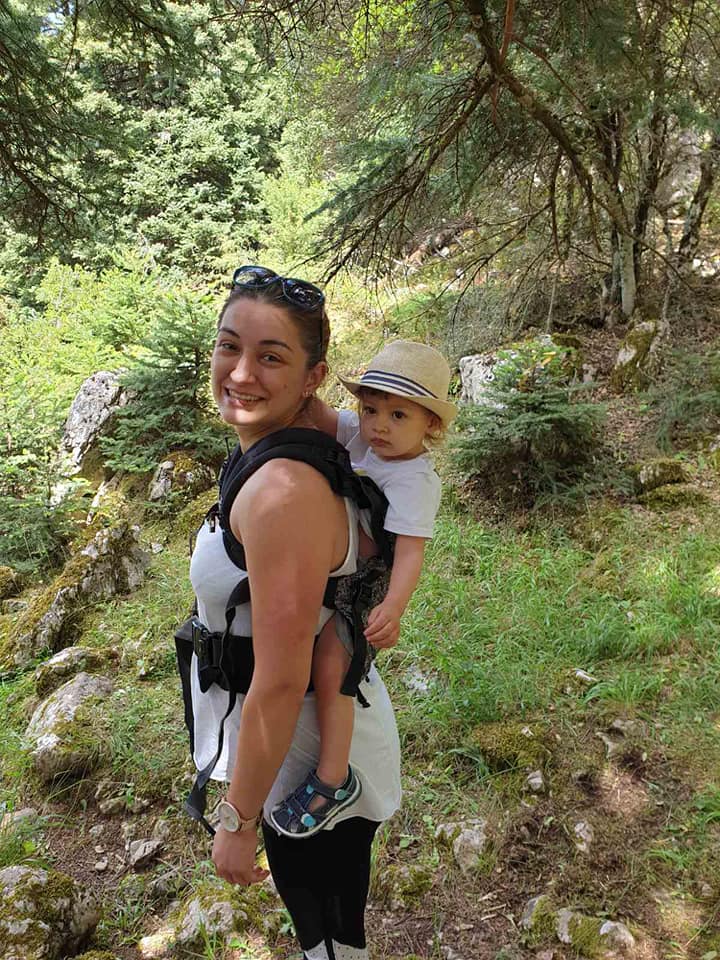
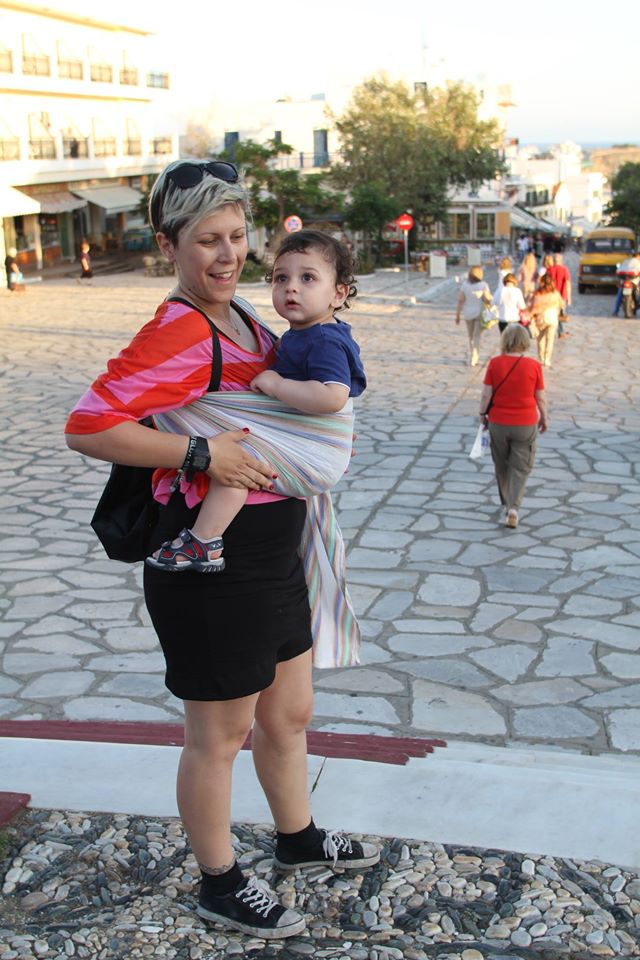


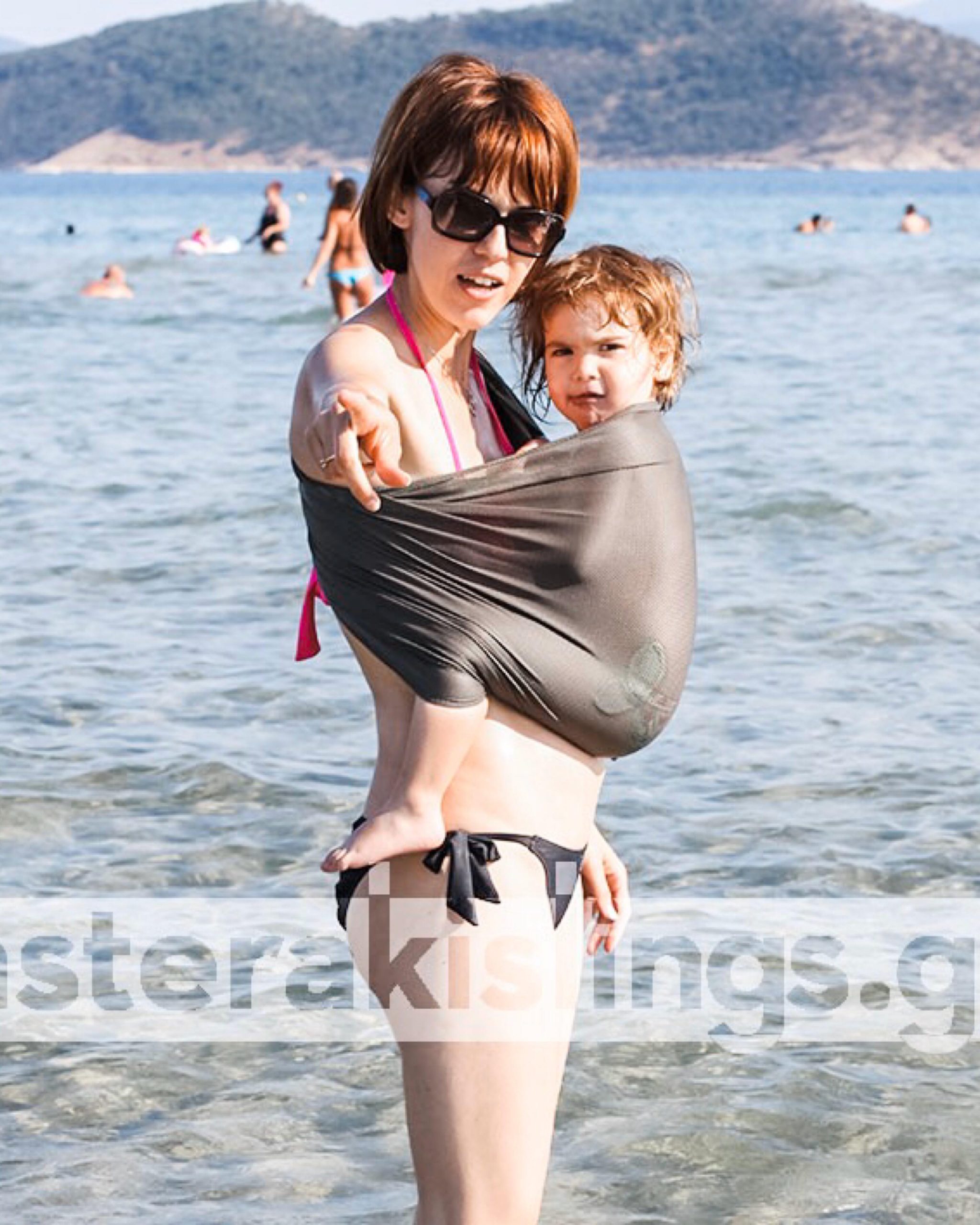
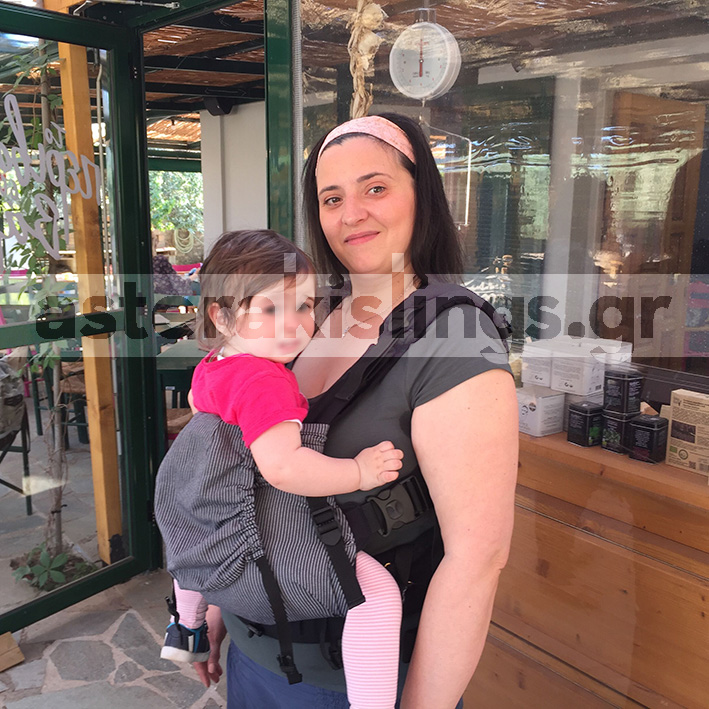

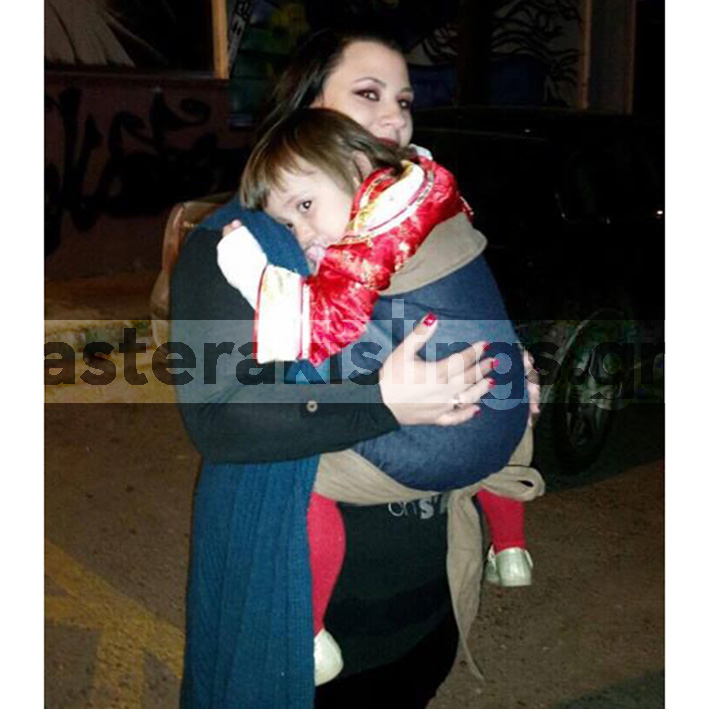

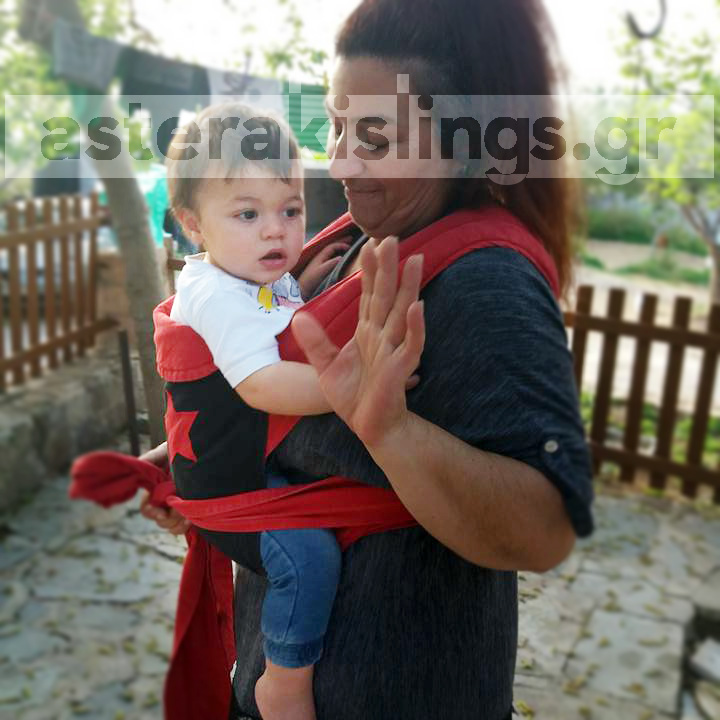

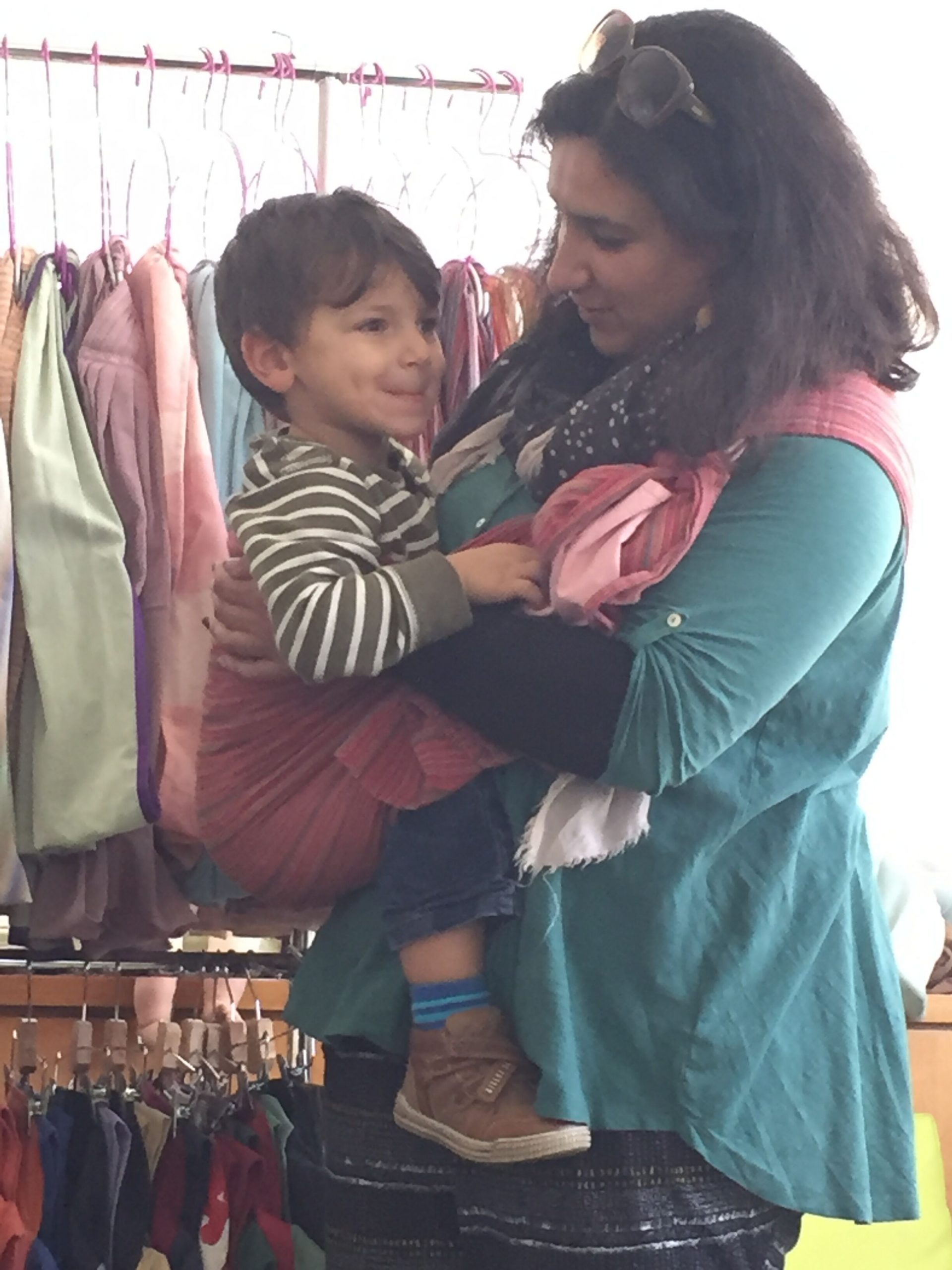
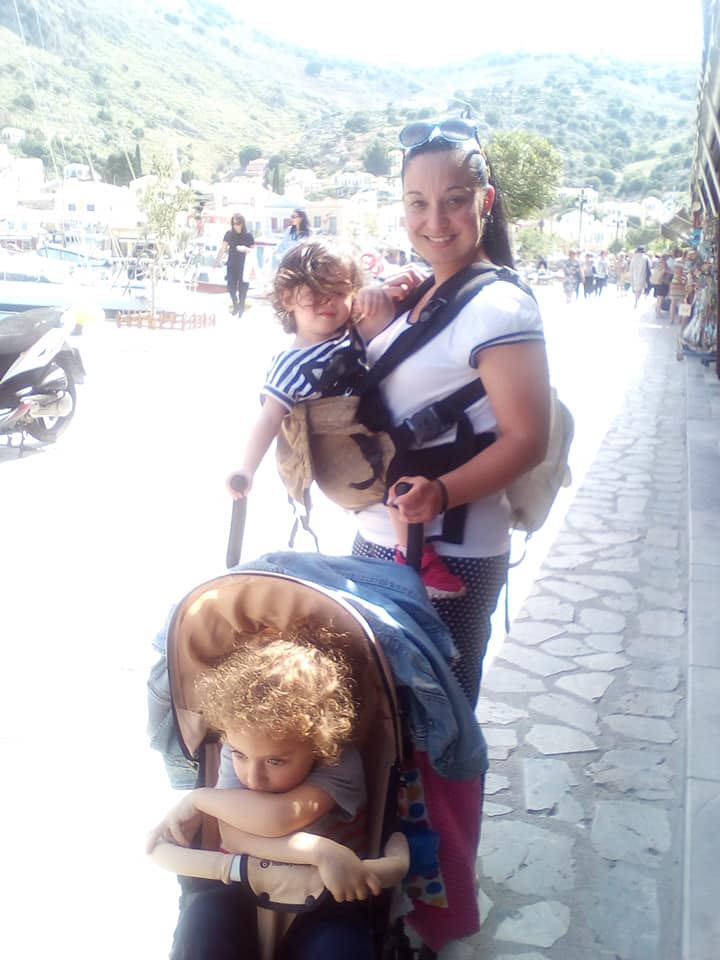

I have a back / neck / shoulder problem; I want something comfortable for long periods and for an older child.
Don’t forget your posture
Beyond correct positioning, your posture also matters. Whatever weight you carry, and however you carry it, you should normally have good posture, keep your core engaged, and so on. Another issue we often see with the sling is that, without realising it, some parents lean to one side, raise one shoulder, hunch forward into a protective posture, or lean back thinking they’re keeping their balance. All of this is wrong and will strain and tire you.
It tires me out!
Many things play a role:
- What sensitivities / problems you have.
If you have a doctor’s instruction not to lift any weight at all, that means you shouldn’t be picking up the baby either. No carrier makes the weight disappear. - What carrier you’re wearing
Is it ergonomic? Is it suitable for your baby’s age / weight? - How you wear it
We’ve seen quite a few cases of ergonomic carriers worn the wrong way. “But I’m doing everything right,” says the person wearing it. But sometimes, small details make a big difference! - How long you wear it
Once, a mum said:
– Lovely, but it tired me out.
– May I see how you wear it? Are you wearing it too low or too far from you? That would explain why it tired you.
– Oh, I’m not wearing it wrong! Imagine, we went for a three-hour walk and the baby didn’t wake up at all!
– Well, you went for a three-hour walk and you’re wondering why you got tired? If I go for a half-hour walk on my own, without a baby, my back seizes up! - What you do while wearing it
A relaxed walk is one thing, and doing a whole load of chores is another. (Many people do LOTS of chores while wearing their baby!) - How used to it you are
Starting with a small baby that gains 25 g a day and wearing it every day, so you barely notice when it reached two years old, is one thing. Wearing it once in a while, so your body doesn’t get the chance to learn, is another. And starting with a baby that’s already big is yet another. You need to give your body the chance to adapt gradually — wear it little by little.
Think about it for a moment: very rarely do we hold the baby in our arms while standing for a long time. You’ve never stayed standing with the baby in your arms for more than 10 minutes at a stretch.
I say this to parents and they tell me, annoyed: “What are you talking about? I hold the baby all day long!”
And I say, “Yes, I believe you spend the whole day dealing with the baby and can’t do ANYTHING else. But you’re not standing.” When holding it, after a while you’ll sit down, put the baby down and then pick it up again, and then sit down again, and so on.
We say “I hold it all day long” and it really feels that way, because we can’t do anything else all day. But in reality, standing with it in our arms, we hold it for a few minutes at a stretch. Isn’t that so?
With an Asteraki we might “fool ourselves”: it’s so comfortable that we wear it continuously for much longer, do other things at the same time, and the time flies by. But only we know our own personal limits.
Besides, all new parents are a little tired anyway… They have plenty of things tiring them out and lots of new movements — always bending down, lifting things, and so on.
It’s never reasonable for a carrier to hurt you while you wear it. But feeling tired after a while can be perfectly normal.
Especially if you’re not used to it and even half an hour is something new for you. What I want to say is that there is no carrier that makes the weight disappear. With an Asteraki you can wear the baby for longer than you’d have held it in your arms. That’s perhaps the advantage — but it’s also the risk.
If lifting weight generally strains you, having your baby in an Asteraki for longer than you’d have held it in your arms will strain you more. The only way not to be strained is not to hold the baby at all. Only if you have no other choice (that is, you have to hold the baby in your arms anyway) is it a better solution — and only for as long as you’d have held it in your arms anyway.