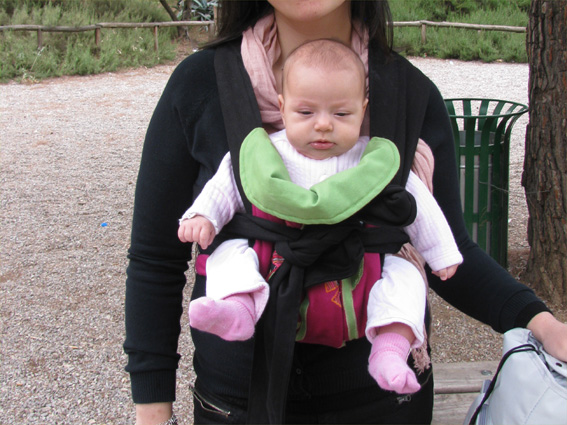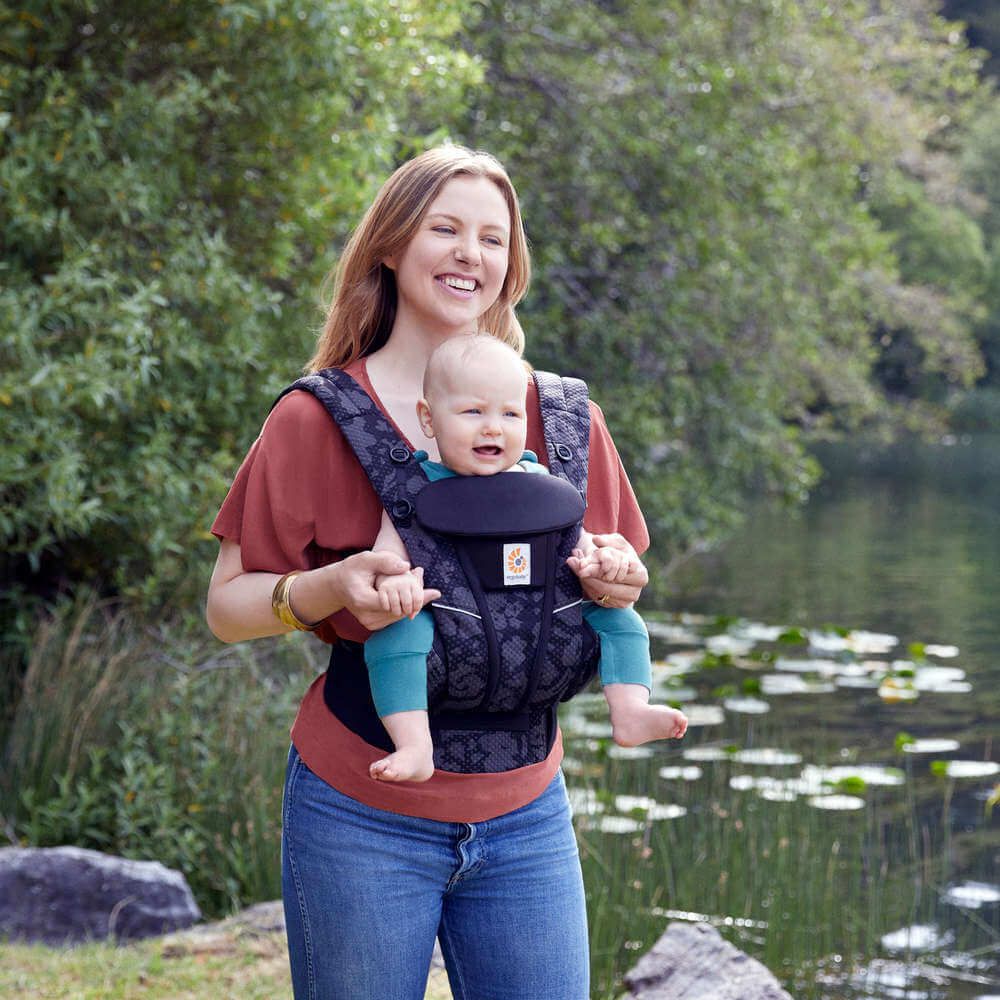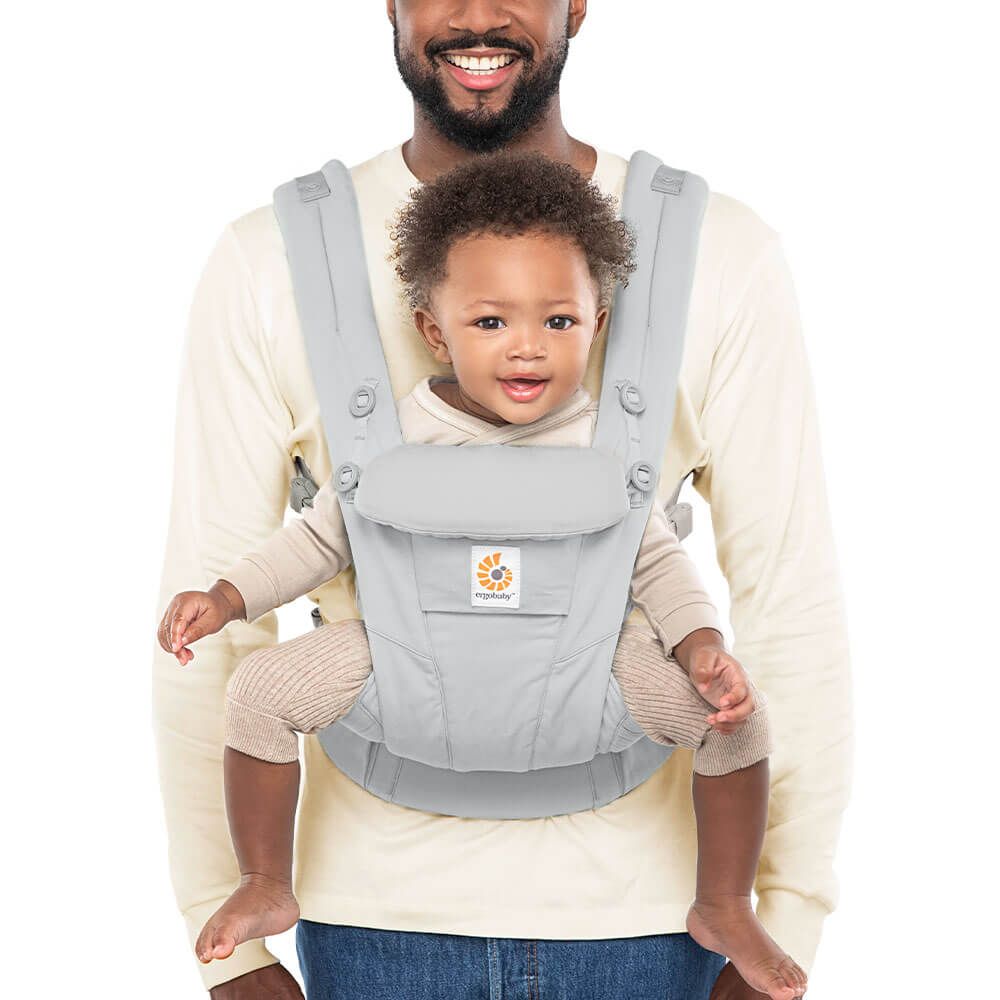
Baby facing outward in a sling
An analogy with car seats
It may not seem obvious right away, but this note is relevant to babywearing, I promise.
I’ll start, though, with a subject that seems unrelated: babies in car seats. New research says that children up to 4 years old should sit in rear-facing seats, facing the seat. Statistics show that this is safer than the child facing forward.
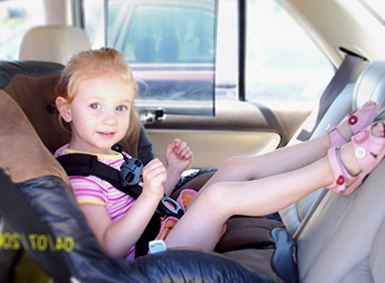
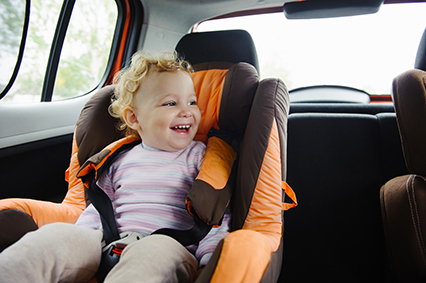
Nevertheless, all the companies that make car seats also make forward-facing seats intended for babies aged 9 months and over. Even the companies leading the “no forward-facing under 4 years” campaign still sell such seats.
Forward-facing seats for babies from 9 months to 4 years are NOT forbidden. They are NOT considered dangerous. They aren’t recommended, yes. There are safer options, yes. The others, the rear-facing ones, are better for the baby, yes. But the companies that sell them can make the recommendation, can inform, and from there on it’s the parent’s decision what to choose.
On to babywearing
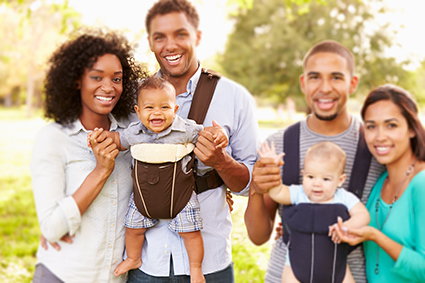
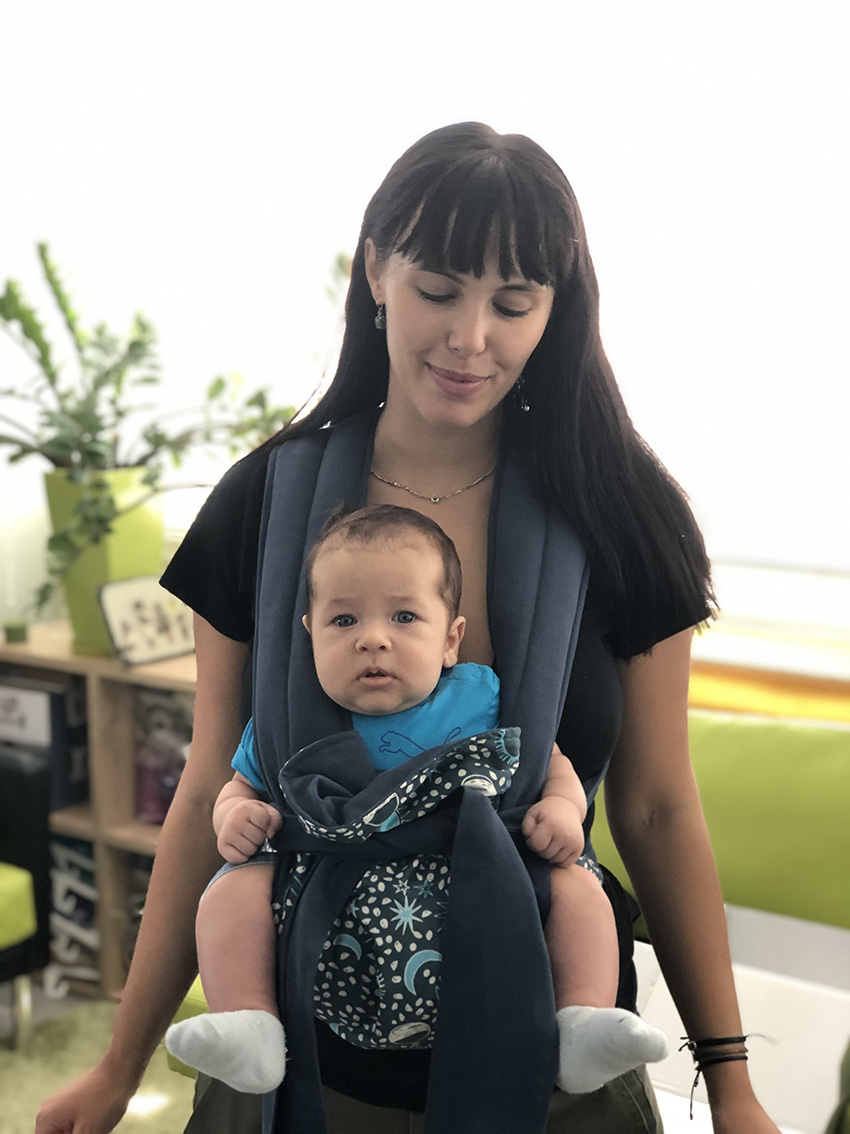
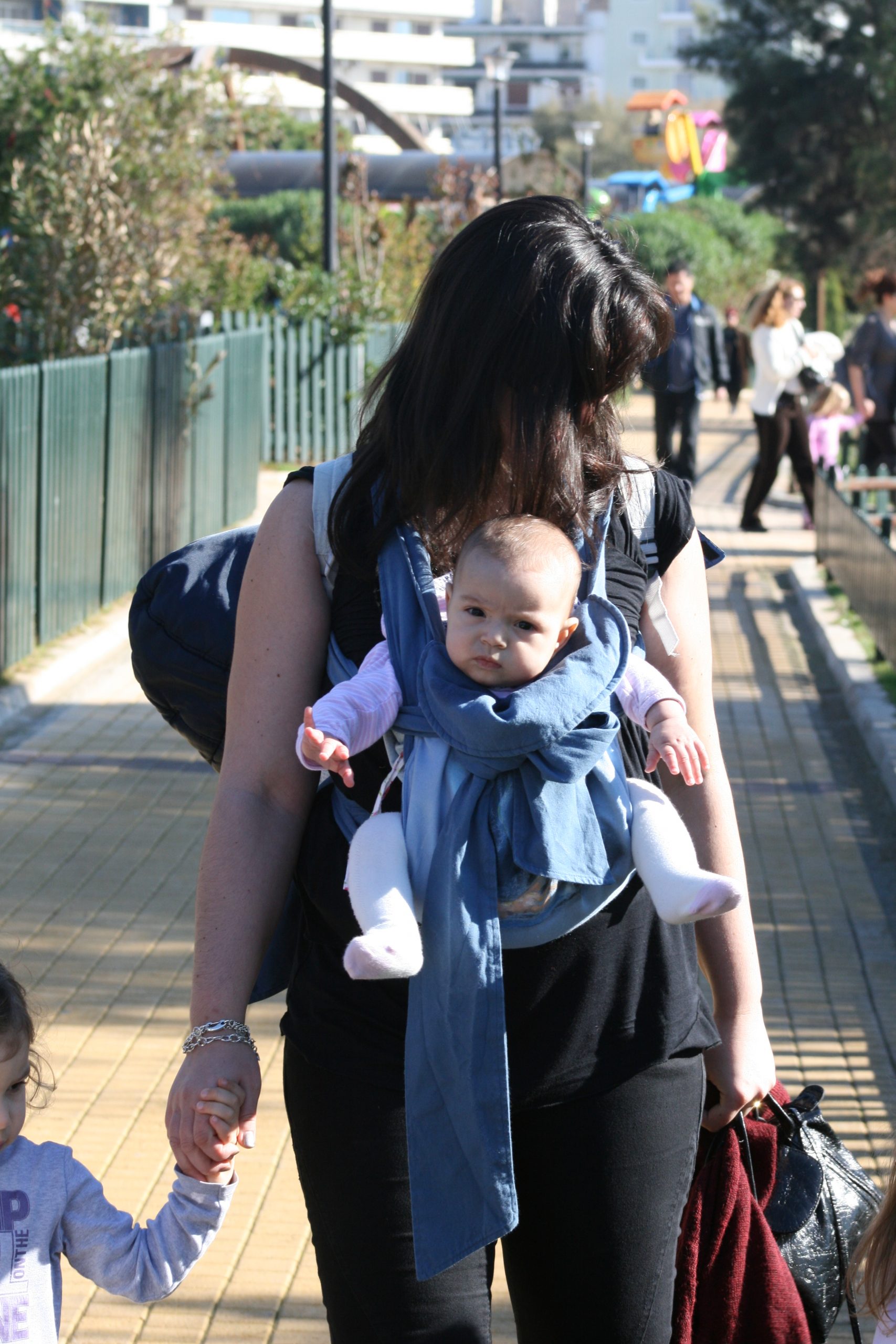
Positions in which the baby faces outward. If they are done correctly (with the baby’s pelvis tilted forward, with the knees high and at the right angle, with the baby’s weight resting against the parent and not held out in front of the carrier) they are NOT forbidden. They aren’t recommended, yes. There are better positions with which you can achieve the same goal (for the baby to see), yes. But they are NOT dangerous.
Conventional carriers, where the legs dangle down and the baby isn’t comfortable, are NOT forbidden. They are sold. They aren’t recommended, yes. There are better options. Certainly yes. But let’s be a little careful when we say that something is forbidden or that it is “dangerous”.
Babywearing is an imitation of the way we hold babies
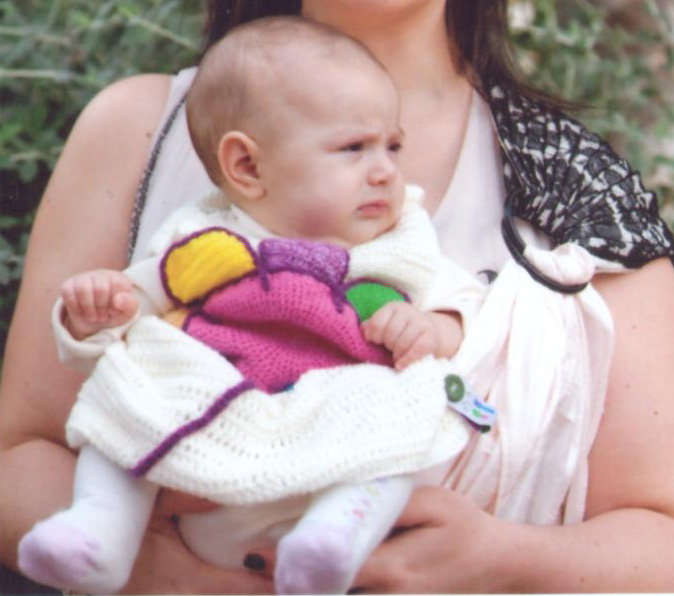
Many parents hold their babies in their arms facing outward. Babywearing is an imitation of the way we hold our babies. We would never hold them with their head pressed against our chest, unable to breathe. But we would hold them so they can see. With a time limit, yes. We’ll turn the baby back inward when it shows signs of being bothered, yes. But there are moments when even this position is part of the repertoire of positions we use as parents. There are babies who, at certain moments, have such a great need for this position that it feels almost cruel not to allow it to them even for a few minutes.
There are babies who, at certain moments, have such a great need for this position that it feels almost cruel not to allow it to them even for a few minutes.
What the official bodies say
I have discussed this subject with many official bodies, with many babywearing schools and also with representatives of companies that make carriers. And I have discussed it both on a personal level and formally, as part of my training. Officially, the position in which the baby faces outward is NOT forbidden. The guidance is: We inform parents about their options, about the positions in which the baby can see even without facing outward. We inform them about the baby’s need to see the parent and about how the baby processes stimuli. But if it is the parent’s decision to wear their baby facing outward, the best thing we can do is to inform and to teach how to do it correctly and with the necessary time limits.
Officially, the position in which the baby faces outward is NOT forbidden. The guidance is:
- We inform parents about their options, about the positions in which the baby can see even without facing outward.
- We inform them about the baby’s need to see the parent and about how the baby processes stimuli.
- But if it is the parent’s decision to wear their baby facing outward, the best thing we can do is to inform and to teach how to do it correctly and with the necessary time limits.
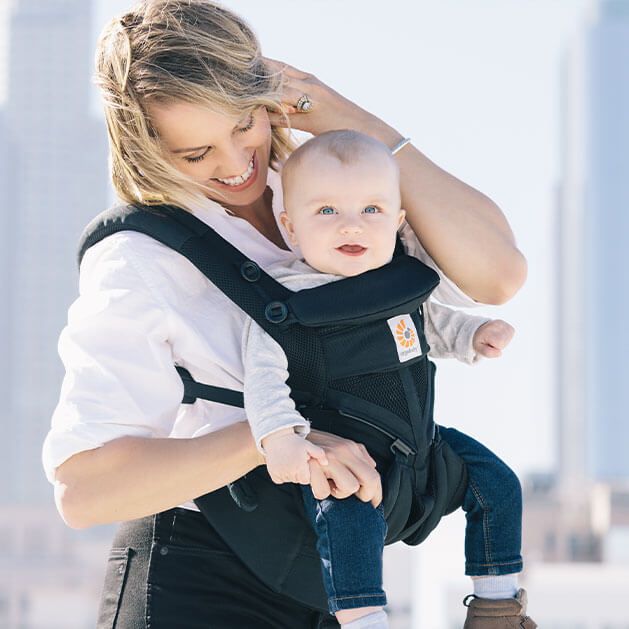
This position is done correctly with an Asteraki mei tai and, among the buckle carriers, with the Omni and Embrace models by Ergobaby:
Personal opinion: it’s not the most comfortable — not for you either
In any case, as a personal opinion, this position isn’t the most comfortable for you either. If you wear your baby so that it faces outward, you may tire more quickly than in other positions. Watch this little video that explains why.

In general, if the baby wants to see, there are much better positions. Try a position on the side, a position with the arms out, a position high on the back.
The baby needs to see you
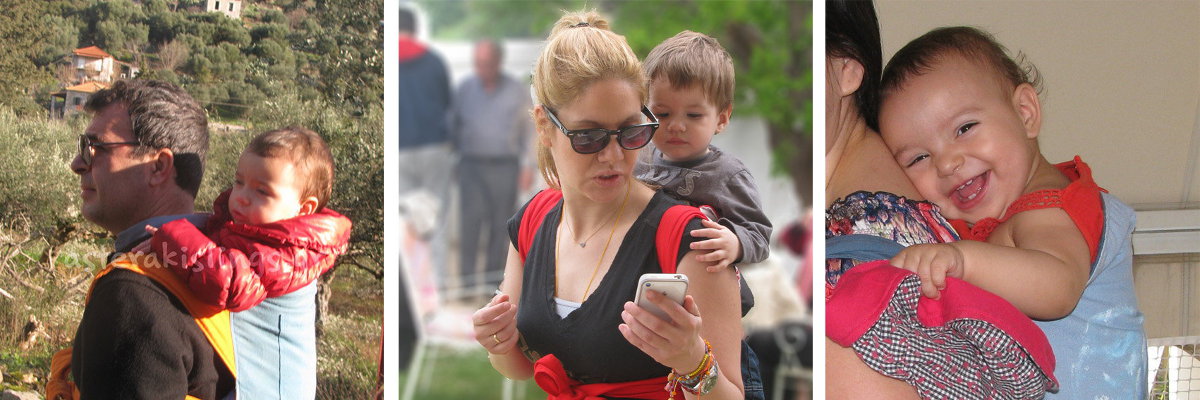
Think about whether you’ve ever noticed older toddlers at the playground, running, tripping and falling. They immediately lift their head and look at their mum. And when the mum says “Oh! Did you fall, sweetheart?”, then the baby cries — with a delay!
The baby needs to see how you react to whatever is happening, so it knows how to react itself. That’s why it needs to see your face, your expressions.
Imagine: you’re wearing your baby facing outward. Your friend Yiannis sees you from a distance and comes toward you with his arms wide open, shouting excitedly: “Hey! There you are, my friend! It’s been so long since we caught up!”
Think, too, about the fact that the baby needs to see you:
Think about whether you’ve ever noticed older toddlers at the playground, running, tripping and falling. They immediately lift their head and look at their mum. And when the mum says: “Oh! Did you fall, sweetheart?”, then the baby cries, with a delay! The baby needs to see how you react to whatever is happening, so it knows how to react itself. That’s why it needs to see your face, your expressions.
Imagine you’re wearing your baby facing outward. Your friend Yiannis sees you from a distance and comes toward you with his arms wide open, shouting excitedly: “Hey! There you are, my friend! It’s been so long since we caught up!”
If the baby could see you, it would see that you too are smiling at Yiannis and that you are calm and happy to see him. If it can’t see you, it doesn’t know how to react on seeing someone approaching with an aggressive posture and a loud voice. Don’t be surprised if your baby bursts into tears! That wouldn’t happen if you were wearing it in front of you, or on your side. It would see both Yiannis and you!
Our babies don’t learn simply by looking at the world; they learn by putting what they see in relation to our reactions, our expressions, our movements, our face.
If you still want to do it: do it correctly
You have no reason to wear your baby facing outward. This position has many difficulties and offers you nothing that you can’t achieve with other positions.
If you nevertheless intend to do it no matter what, it’s preferable to have help in order to do it correctly, with the right carrier that allows good positioning.
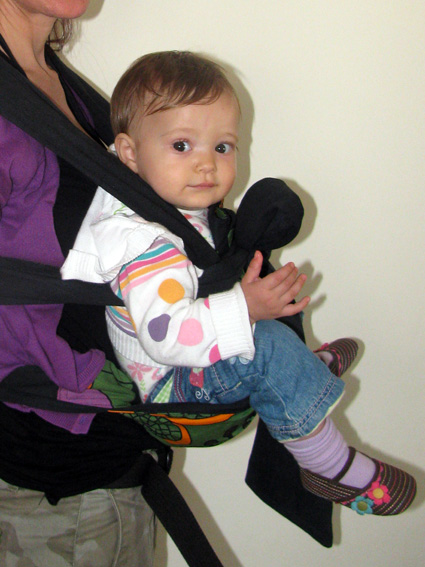
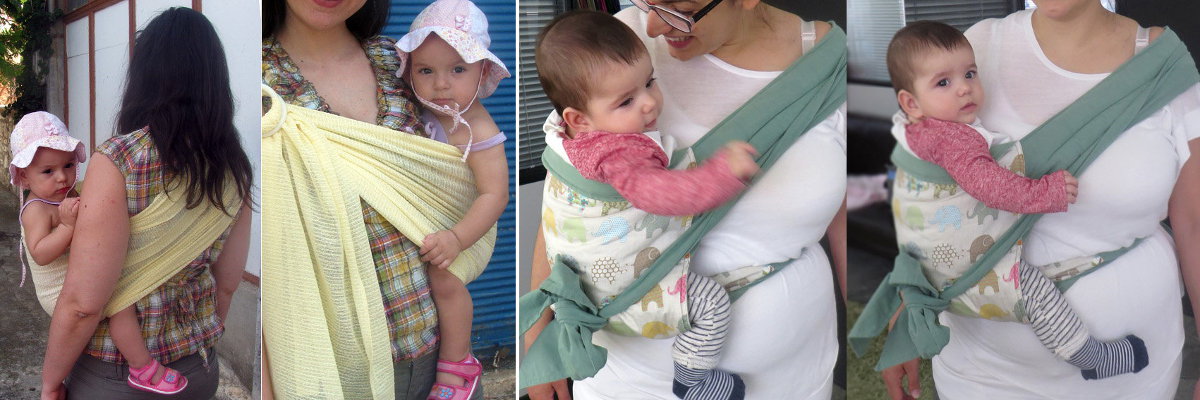
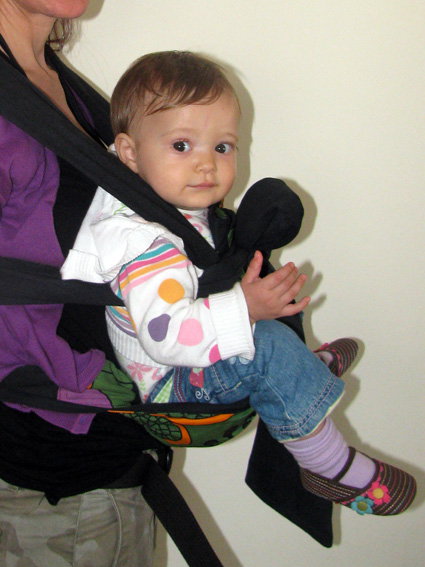
Take a look at the photo beside this text. As you’ll be able to see for yourself, the position has nothing to do with the position a baby is in when facing outward in conventional carriers. There the legs dangle down, the baby hangs from the crotch, its spine takes on an unnatural posture.
You have no reason to wear your baby facing outward. This position has many difficulties and offers you nothing that you can’t achieve with other positions. If you nevertheless intend to do it no matter what, it’s preferable to have help in order to do it correctly, with the right carrier that allows good positioning. Take a look at the photo beside this text. As you’ll be able to see for yourself, the position has nothing to do with the position a baby is in when facing outward in conventional carriers. There the legs dangle down, the baby hangs from the crotch, its spine takes on an unnatural posture. In a sling it doesn’t have to be that way. The baby’s pelvis must have a forward tilt, the knees must be higher than the bottom, the legs open at 90 degrees to each other, the baby’s weight resting against your chest and not against the carrier. The baby’s whole leg is supported and the back is rounded. Don’t leave it in this position for more than 10-15 minutes, because that way your baby receives a lot of stimuli that aren’t its own choice. Don’t try this position with babies who can’t yet support their head well. If needed, ask for help from someone who has been trained to train others.
If needed, ask for help from someone who has been trained to train others.
📋 Conclusions
- The position in which the baby faces outward can be done — the possibility exists.
- This position isn’t the most comfortable for you (and it’s difficult to do correctly without experience).
- Conclusions:
1. The position in which the baby faces outward can be done; the possibility exists.
2. This position isn’t the most comfortable for you (and it’s difficult to do correctly without experience).
3. This position can tire the baby psychologically and confuse it in relation to its sleep, which is why it has a time limit.
4. This position isn’t intended for babies under 3 months old.
5. The baby can see very comfortably from other positions.
6. As always, you know best about your own baby! - This position isn’t intended for babies under 3 months old.
- From the side, above your hip, your baby sees everywhere freely
- As always, you know best about your own baby!
Happy babywearing!
A nice article in English on this subject is this one, too.