

Your baby sleeps in the carrier. Is that a problem?
You put your baby in the carrier to head out for a walk, and by the time you reached the corner they had already fallen asleep. The same thing happened yesterday at the supermarket. The day before, they slept while you tidied up the house a little.

Is that a problem? Not necessarily. It might even be the opposite!
On you, your baby has your closeness, feels your warmth, hears your heartbeat, follows your movement. If they are sleepy, they already have much of what they need to relax and fall asleep, without you having to do something every single time just to get them to sleep.
It is very common for a baby who WON’T sleep in your arms no matter what to fall asleep almost instantly in the carrier. Maybe it helps that you can walk more comfortably, maybe that you have relaxed a little too, now that you no longer have to hold them. Your baby feels safe and drifts off. Finally!
“Yes, but I feel like they only sleep in the carrier!”
Do you mean that this is the only way they fall asleep? Or that they fall asleep just fine, but the moment you try to lay them down in the crib they wake up?
Let’s take the first one first. If the carrier is the easiest way for your baby to fall asleep, does that work for you?
You may not have realised it, but you almost always do something to help your baby fall asleep. You might breastfeed them, you might rock them while walking up and down the hallway, you might dim the lights, sing to them and stay beside their crib. Many families have something they do at sleep time, something familiar that helps the baby settle.
The carrier can be part of that routine too. You don’t have to wait for your baby to cry. As soon as you see them starting to get sleepy, yawning, rubbing their eyes or losing interest in what is going on around them, you can put them in the carrier and help them settle down. It’s not a problem at all!
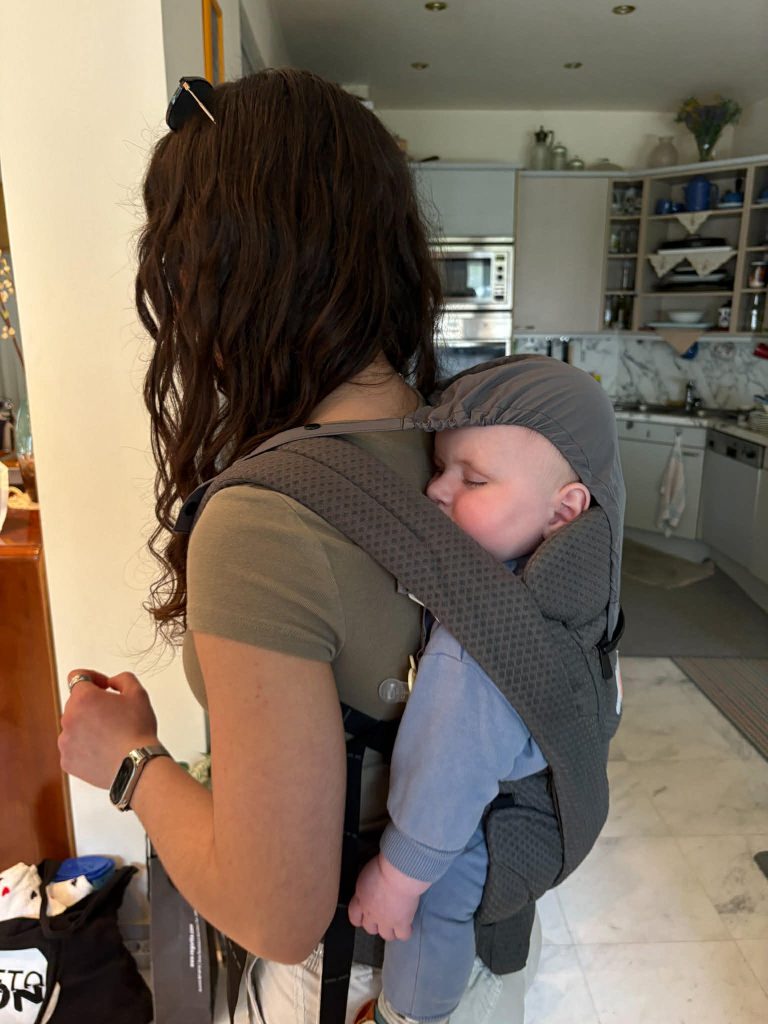 Pediatrician William Sears describes this process as “babywearing to sleep”: you use the carrier to help your baby fall asleep and then you move them to their bed.
There are families who want their baby to fall asleep in their own bed and make sure to be home at sleep time. Others need more flexibility, because there is an older child finishing school, because they are often out, because they travel a lot. For these families, the fact that the baby can fall asleep in their arms, even when they are away from home, is a huge help.
“They slept for ten minutes and woke up. Now what?”
Let’s say you are at the supermarket. Your baby fell asleep on you while you were shopping and, a little later, woke up and is looking around. You still have half your list to go, but they seem cheerful and not at all willing to close their eyes again. You don’t have to automatically start the whole rocking-to-sleep routine from scratch!
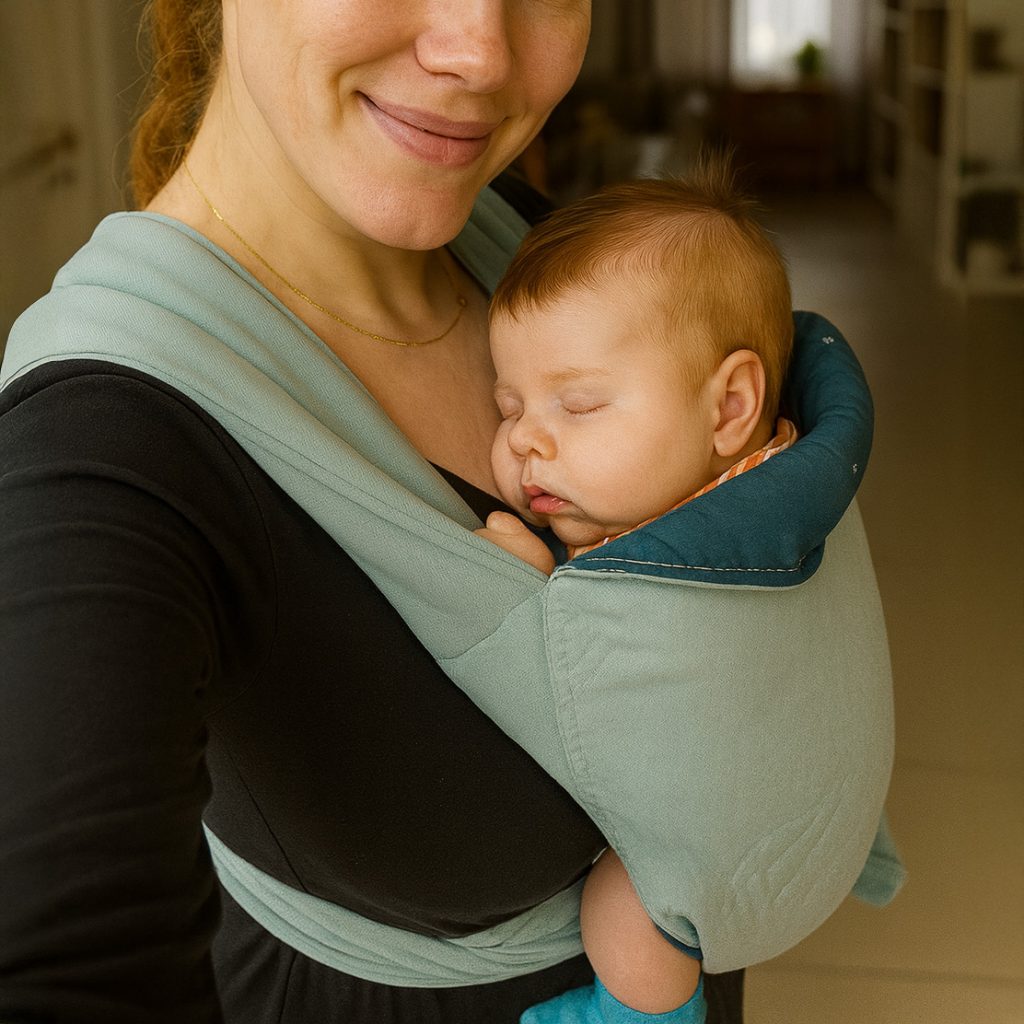 A daytime nap is one thing, getting ready for nighttime sleep is another. During the day your baby might fall asleep while you are doing a chore, while you are walking, with light, sounds and movement around them. Through the day, your baby may sleep and wake many times. Watch your baby, not just the clock. If they woke up rested, they may not need any more sleep for now. If they are still sleepy and struggling, we help them fall back asleep until their batteries are full again!
Note: we don’t forget the basic rules for safe sleep. While you are wearing them, you stay awake, you can see their face and you check that their nose and mouth are clear and their chin isn’t resting on their chest. As soon as you get the chance, you move them to a suitable, flat and firm sleep surface (on their back).
“The moment I lay them down in the crib, they wake up!”
Going from your warm arms to the mattress changes a lot all at once: the contact, the movement, the support. Just when you were saying “we made it”, the moment they touch the cool sheet, the baby opens their eyes!
Before you take your baby out, you will wait a little, until they seem more deeply asleep, with a calm little face and relaxed hands. Instead of taking the baby out of the carrier, you can first take the carrier off yourself, supporting the baby the whole time. You loosen it slowly, keep the baby close to your body and lay them down on their back in their crib. Then you remove the carrier from the crib, and the baby (you hope) carries on sleeping!


If they wake up, don’t take it personally! If they are still sleepy, you help them settle and try again. If it was a daytime nap and now they are ready to take in the world, the next attempt can wait until the next sleep.
Falling asleep on you is not a bad habit in itself, nor something you absolutely have to “break”. It doesn’t mean they will need the same way to fall asleep forever. As they grow, you will rediscover together what works for you.
You may also like
Psychology & Bonding
Since I Became a Mom, I FORGET Everything!
Psychology & Bonding
Why it’s okay that I do my chores with my baby
Babywearing Basics
Sibling Jealousy After the Arrival of a New Baby