
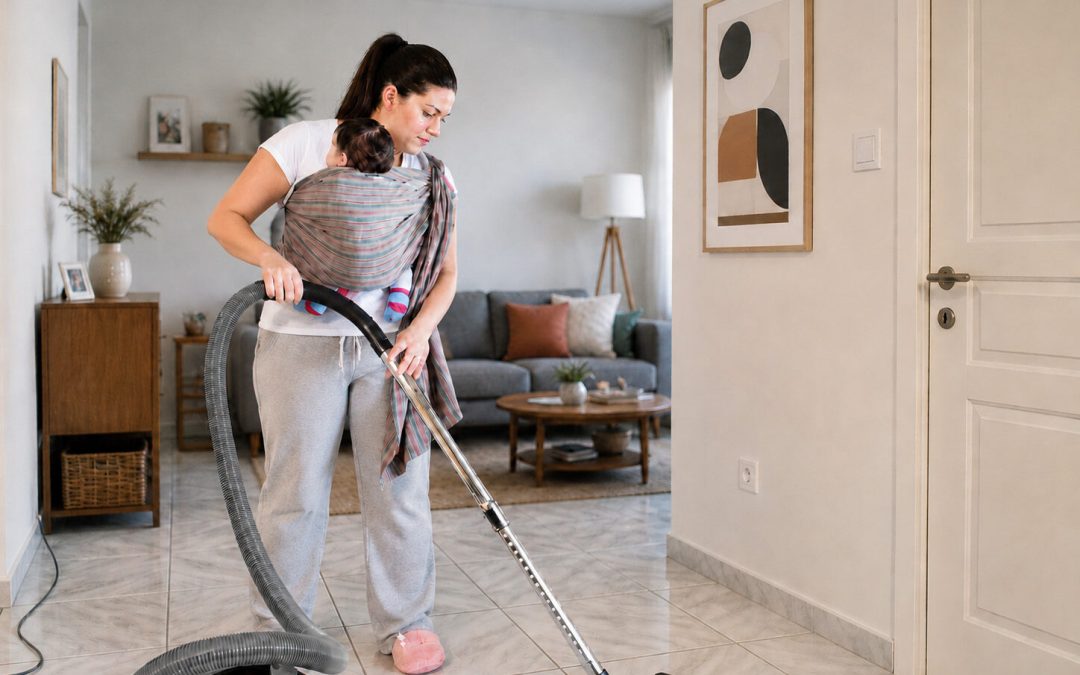
I think many of us mums have thought about it at some point.
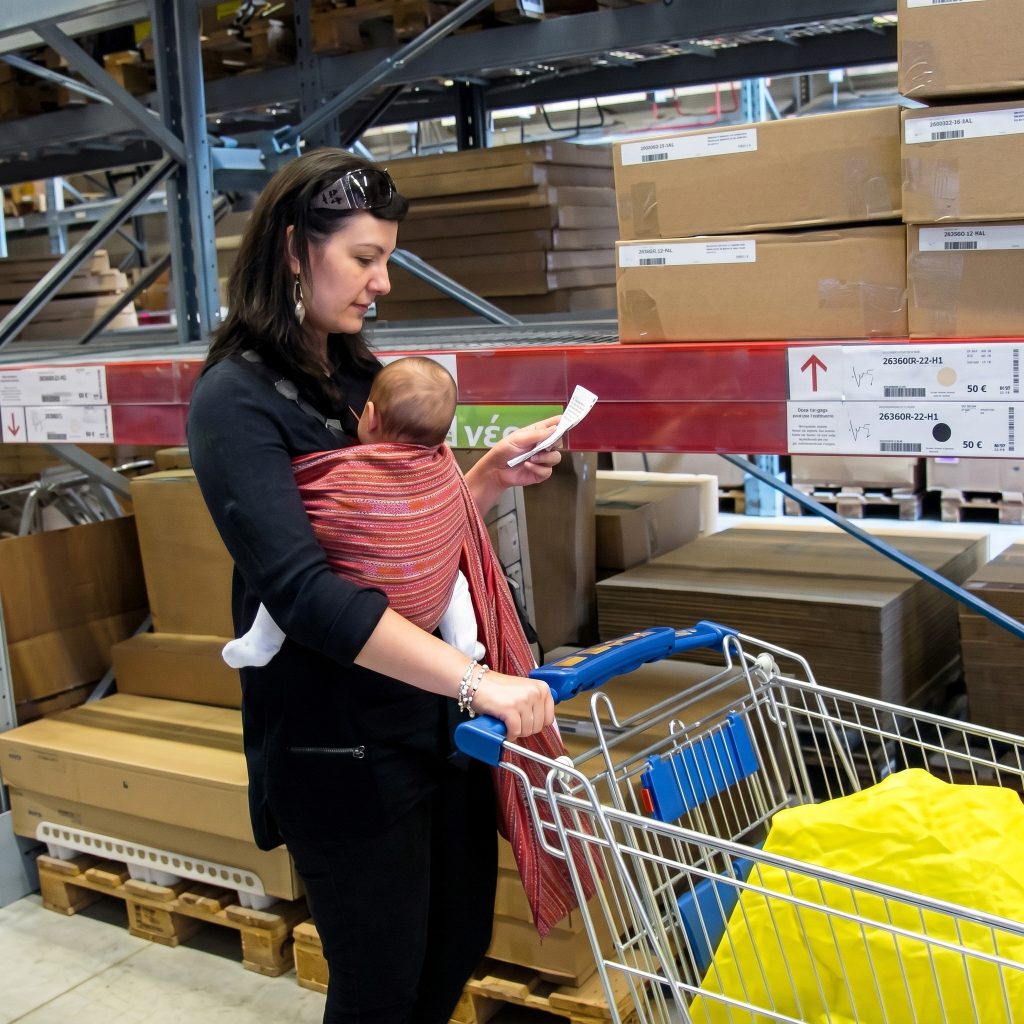
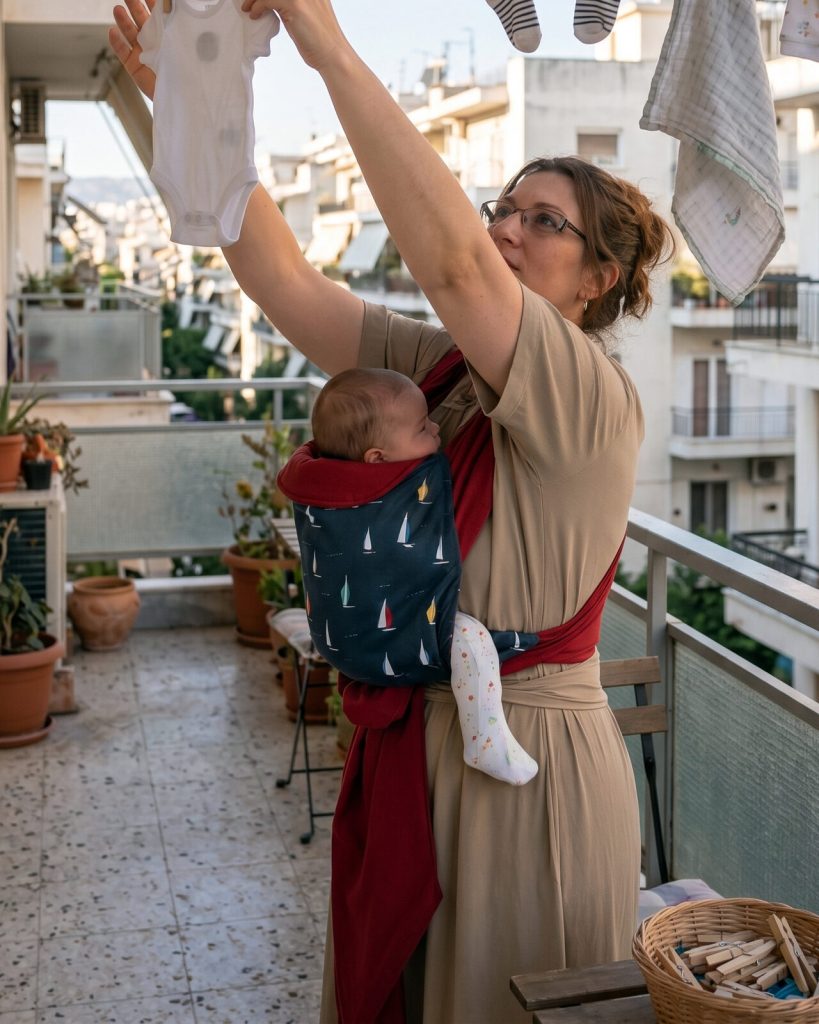
You have your baby in the carrier and you’re doing something completely mundane. Grocery shopping, hanging out the laundry, going to pick up your older child from school, taking the dog for a walk, tidying up the house.
And somewhere in the middle of all that, a thought crosses your mind: “Shouldn’t I be spending this time with the baby right now?”
But you’re already with them.
For a baby, being on you while you go about your daily life isn’t dead time. It’s their daily life too.
You don’t have to constantly organise something for the baby
With babies we’ve also picked up this anxiety that we have to keep offering them “stimulation” all the time.
Showing them toys, talking to them, doing activities, spending face-to-face time. All of that is lovely and necessary at certain moments.
But a baby takes in an enormous amount of information even without us having organised anything for them.
While you’re hanging out the laundry, they see your hands moving, they hear the clothespins, they feel your body turning and walking. At the supermarket they see people, they hear voices, trolleys, bags, tills. When you go to pick up their sibling from school, they see faces, children, people talking to one another.
We consider all of it boring, everyday routine. For a baby it’s brand new.
And you don’t need to narrate every step or turn the shopping into an educational activity. The baby is simply there, observing.
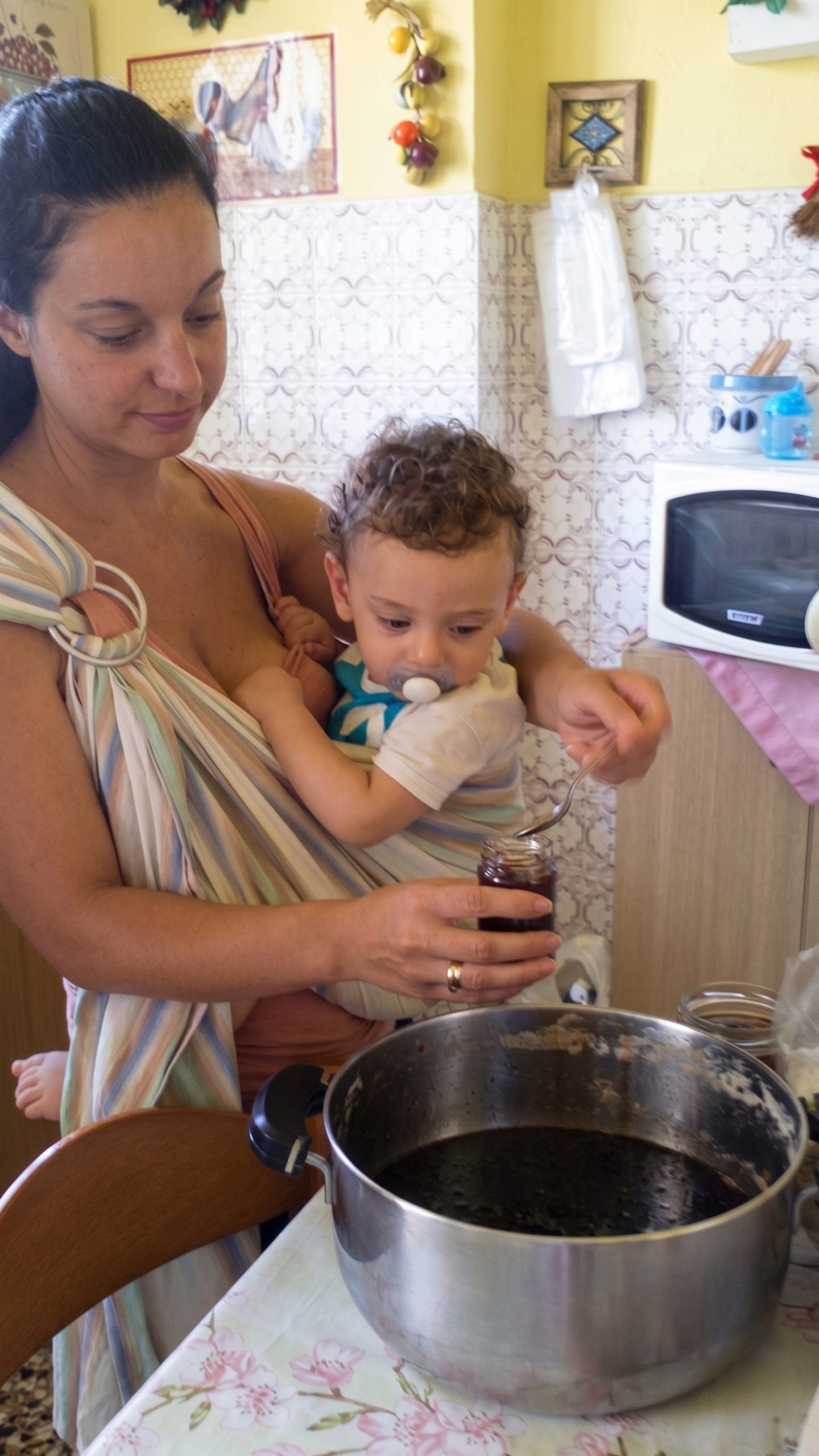
And they do it from a very safe spot
The world outside the womb is quite intense for a newborn. Lights, sounds, changes in temperature, people, movements, smells. All of it unfamiliar.
On you, in the middle of all that, there are things that are already very familiar.
Your smell, your voice, your breathing, the way you walk, the warmth of your body.
This is one of the reasons so many parents say their baby is much calmer when they wear them.
It’s not just a personal impression. In a well-known study of 99 mothers and babies, the parents in one group were encouraged to hold their babies more throughout the day, not only when they cried. At six weeks, the babies in that group cried and fussed significantly less than those in the other group.
Of course this doesn’t mean there’s some magic formula and that every baby in a carrier stops crying. Babies cry. But contact, movement and closeness with the parent often help them to regulate and to calm down.

A calm baby has more time to observe
And this is the part I find most interesting.
When a baby doesn’t need to spend all their energy protesting, they have more time to look around them.
From their spot in the carrier, they’re at the height of grown-up life. They see faces. They hear conversations. They watch your expressions when you talk to someone. They hear when you speak, when you pause, when the other person answers.
These things are far more interesting than they seem to us.
A baby doesn’t only learn when we sit across from them with a toy in hand. They also learn by listening to two people chatting in the supermarket queue.

They also learn what it’s like to live among people
When the baby is with you throughout the day, they see far more than objects and colours.
They see you talking to the neighbour. Smiling at someone. Answering your child. Greeting the cashier. They hear different voices and tones and, little by little, they begin to grasp how these small everyday interactions work.
Language, too, is everywhere around them without us needing to give them a “lesson”. In the conversations we have, in the questions, the answers, the laughter, the pauses.
And because they’re so close to us, they hear a great deal of this real, everyday communication.

Of course, they might just be sleeping
And good for them.
You may have gone to the supermarket, then to the Box Now locker, then picked up your child from school, and the baby may have seen none of it because they were sleeping on you.
That’s absolutely fine.
There’s no list of experiences they have to tick off by the end of the day.
When they need sleep, they sleep. When they wake up, they’ll go on seeing, hearing and getting to know the world.
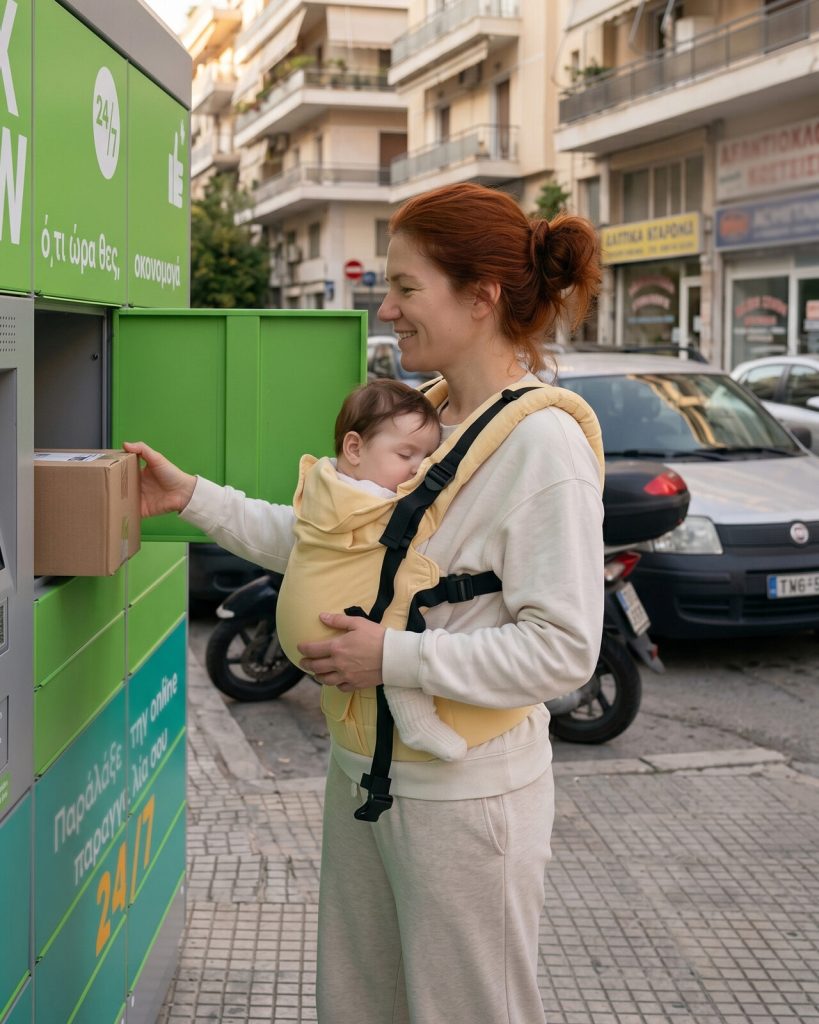
You have to somehow get through your day too
This is something that sometimes gets lost when we talk about what “the baby needs”.
Yes, they need their person very much. Especially in the first months.
But their person also needs to eat, to get out of the house, to do the shopping, to take the other children somewhere, to run a load of laundry and, every now and then, to run the vacuum cleaner.
The carrier isn’t a tool for turning us into super-productive mothers who do twelve things at once.
It simply makes something very practical possible: not having to choose, every single time, between holding the baby and doing what needs to get done.
Sometimes they can happen together.
And often the baby is perfectly happy with that arrangement.
Obviously, we don’t do everything with the baby on us
This is where common sense comes in.
We don’t do chores that expose the baby to hot water, oil, fire, sharp objects or dangerous cleaning products. We don’t climb up onto anything while holding things, and we don’t do activities where there’s a serious risk of falling.
And it goes without saying that the baby must be correctly positioned in the carrier, with a clear airway and a position that stays safe as we move about.
Having our hands free doesn’t suddenly mean we can do anything at all.
Everyday life is life with the baby too
We don’t need to divide the day into time when we’re “with the baby” and time when we’re trying to do everything else.
The baby can be with us in both.
They can be on us while we walk, shop, tidy up, talk to people, go somewhere or simply move around the house.
For us, these are the most ordinary moments of the day.
For them, they’re the beginning of getting to know the world.
And in the beginning, the best way for them to get to know it is very close to us.
Research: In a randomized controlled trial of 99 mother–infant pairs, babies who received additional daily carrying cried and fussed significantly less, with the largest difference seen around six weeks of age.
Research: In another experimental study, mothers given soft baby carriers showed greater responsiveness to their infants, and at 13 months significantly more infants in the carrier group were classified as securely attached than in the control group.
You may also like

Psychology & Bonding
When Your Baby Sleeps in the Carrier
Psychology & Bonding
Since I Became a Mom, I FORGET Everything!
Babywearing Basics
Sibling Jealousy After the Arrival of a New Baby